
BeamMES Waste Management Module: A Small Feature That Could Reveal Big Hidden Losses in Chemical Manufacturing
What if the waste leaving your chemical factory could tell you more about the efficiency of your production?
In chemical manufacturing, every kilogram of raw material has a cost. Manufacturers carefully monitor production quantities, product quality, batch yields and delivery schedules. But what about the materials that do not become finished products?
Spent solvents, chemical sludge, acidic liquids, rejected batches, contaminated packaging and wastewater are common waste streams. While factories have procedures to handle these materials, understanding where they originate and how they relate to production can reveal opportunities for improvement.
Do you know which batch generates the most waste—and how much that waste is costing your factory?
Eight Ways Waste Data Reveals What Production Alone Cannot
Recording, categorizing and reviewing waste against its production source turns disposal into intelligence. Here's what each capability contributes.
Batch-Wise Waste Visibility
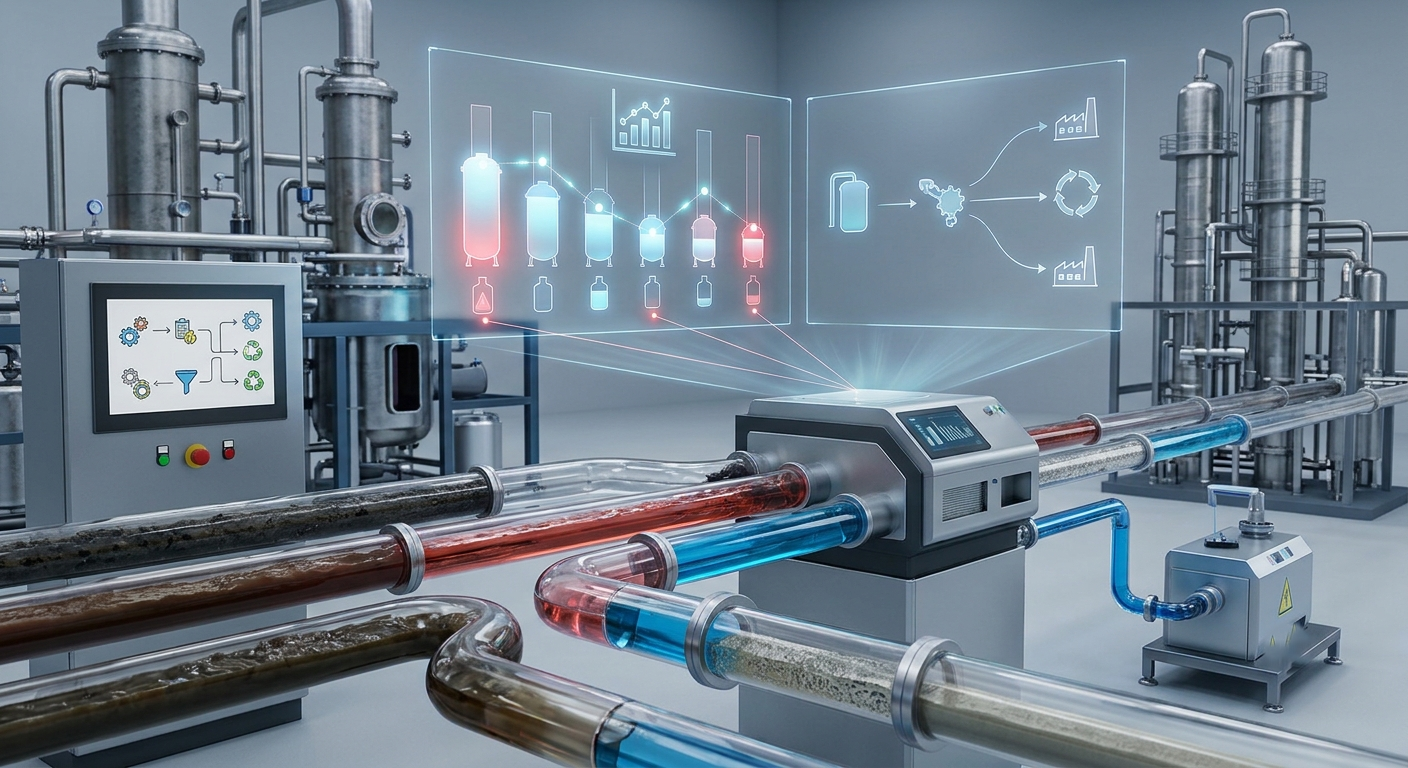
Recording waste against its production source helps manufacturers investigate differences between batches. For example, imagine three batches producing the same product:
- Batch A: 1,000 kg of finished product and 30 kg of waste.
- Batch B: 1,000 kg of finished product and 75 kg of waste.
- Batch C: 1,000 kg of finished product and 35 kg of waste.
Although finished output is identical, Batch B generates considerably more waste. This could prompt a review of raw material consumption, process deviations, filtration performance or reprocessing activities. The comparison is a starting point for investigation, rather than proof of a particular problem.
Waste Identification and Categorization
Different waste streams require different handling and investigation. Categorizing spent solvents, chemical sludge, acidic liquids, contaminated packaging and off-specification materials helps teams understand what is being generated. Connecting these categories with available batch, reactor, process or department information makes records more useful.
Waste Quantity Tracking
Tracking waste quantities over time helps manufacturers identify unusual increases and recurring patterns. Comparing similar products and processes—and considering waste relative to finished output—can highlight where further investigation is needed. The aim is to understand why waste varies and whether those variations can be reduced.
Waste Movement and Disposal Records
Waste tracking continues after production. Maintaining records of collection, storage, recovery, treatment and transfer to authorized disposal facilities helps teams follow what happens to the material. Digitally organized records can also make information easier to retrieve during internal reviews and audits.
Material Loss and Cost Visibility
Waste may represent both a material loss and an additional handling or disposal expense. Reviewing waste quantities alongside material consumption and available cost information can help manufacturers understand the financial impact. This gives production teams a clearer basis for prioritizing improvement opportunities.
Recovery and Process Improvement Opportunities
Consider a factory that regularly sends spent solvents for external disposal. Waste records may show that a particular formulation or process consistently generates more solvent waste than expected. This could encourage the team to review solvent consumption, process conditions or recovery opportunities. Similarly, increased sludge generation could prompt a review of filtration, raw material quality or effluent treatment conditions.
Support for Environmental Record Management
Organized waste generation and disposal records can support internal reviews, environmental audits and applicable regulatory reporting. Teams can spend less time searching through registers, spreadsheets and disconnected documents. However, the BeamMES Waste Management module does not replace an Effluent Treatment Plant (ETP), authorized disposal facilities or statutory environmental compliance requirements.
Connecting Waste With Manufacturing Performance
Waste information becomes more useful when reviewed alongside production tracking, batch management, material traceability and quality records. Manufacturers can examine both how much they produced and how efficiently materials were used. This broader view can help teams investigate losses that finished-output figures alone may not explain.
Better information does not automatically eliminate waste. It helps manufacturers identify where improvements may be possible, whether through lower material losses, better segregation, solvent recovery or more accurate disposal records.
Waste is not always just something to dispose of. Sometimes, it is evidence of a problem happening inside production.
With BeamMES, waste management becomes more than a record
It becomes part of understanding what happens inside your factory—and where the next improvement could begin. Connect waste data with production, batch and quality records for a complete operational picture.
Ready to see what real visibility looks like?
Schedule a DemoWith BeamMES, waste management can become more than a record of what leaves the factory. It can become part of understanding what happens inside it—and where the next improvement could begin.