
Batch Genealogy and Traceability Software
Know what went into every batch, and where every material lot went. Beam MES connects genealogy to the electronic batch record.
Interactive Raw-to-Finish Traceability Tree
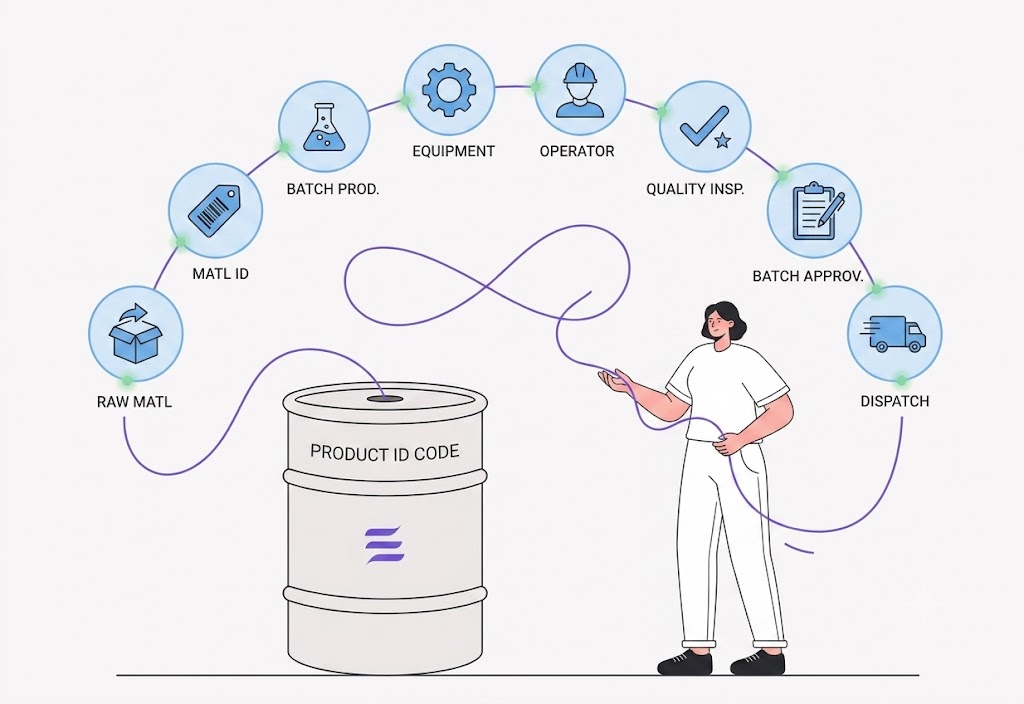
What is Batch Genealogy?
Batch genealogy is the complete family tree of a batch: which raw material lots, intermediates, equipment and people were involved in making it, and which downstream batches or shipments that material went into.
Batch traceability is the practical use of that history: answering a customer complaint, a quality investigation or an audit request quickly and accurately.
Backward Traceability
From a finished product batch to its raw ingredients, process steps, equipment units, and shift operators.
Forward Traceability
From any raw material lot to every intermediate blend, finished batch, and customer shipment it reached.
Why Traceability Breaks Down in Batch Plants
When batches involve multiple intermediate tanks, rework blending, and paper binders, basic ERP lot tracking breaks down:
Records live on paper, in spreadsheets & in the ERP
Raw lots are recorded in the ERP, reactor parameters sit in SCADA logs, and charging times are handwritten on paper batch cards with no single chain linking them.
Materials are blended, split, reworked or reused
Chemical and formulation plants frequently combine multiple lots, save tank heels, or re-process material. Basic ERP inventory lot tracking breaks down under multi-tier re-use.
Intermediates move between reactors and tanks without a recorded chain
Material transfers between holding tanks, crystallizers, and blenders occur without structured genealogical links, obscuring intermediate parentage.
Answering "which batches used this lot?" takes days of searching
When a customer queries an off-spec delivery or a supplier issues a lot recall, QA teams spend 3–5 days manually cross-referencing logbooks to identify affected batches.
The more reactors and products you run, the worse it gets
As production volume scales across multiple reactor trains and high-mix product lines, paper tracking complexity compounds exponentially.
Native MES Linkage
Beam MES binds material movements, intermediate splits, and equipment readings directly into the electronic batch record as work happens.
How Genealogy Works in Beam MES
Materials, intermediate tanks, physical equipment, and electronic batch records connect seamlessly into a single queryable model.
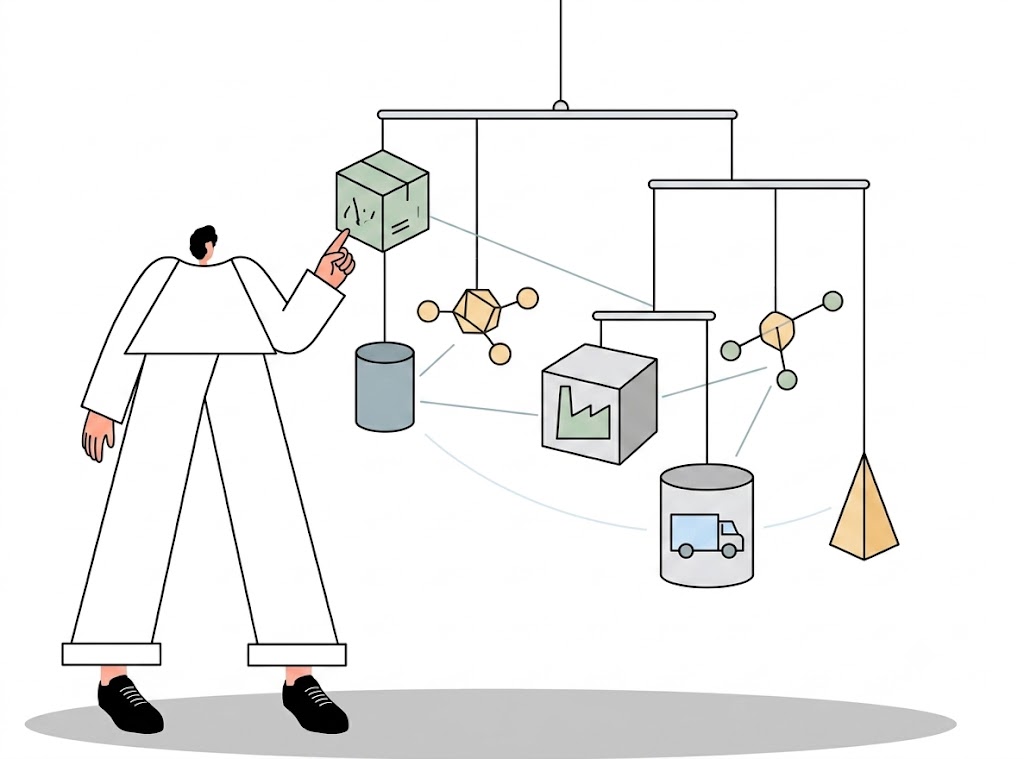
Materials Tied to Batches at Point of Use
When materials are issued and charged on the shop floor, Beam MES records the lot number, quantity, batch order, and reactor vessel contemporaneously.
Ensure no raw ingredient enters a batch anonymously. Barcode scanning and scale verification permanently bind raw supplier lots to the active production order at the point of addition.
Example: Tracing a Customer Complaint
A customer reports a problem with a delivered product. Here is how Beam MES resolves it in seconds:
Find the Finished Batch
Search the delivered lot number in Beam MES to instantly pull its complete record.
See Raw Lots & Equipment
Inspect its raw material lots, intermediate batches, reactors, tanks, and shift operators.
Check Process & QC Data
Review recorded process parameters, sensor curves, and analytical release results for each step.
Search Forward to Contain
Search forward from any suspect lot to find every other batch and customer shipment affected.
Tailored for Chemical & Pharma Manufacturing
Process-specific traceability architectures built for regulated and complex batch workflows.
For Chemical Plants
Specialty and fine chemical plants often blend, rework and reuse material across batches, so lot-level traceability alone is not enough. Beam MES maintains complete ancestry across reaction stages, solvent recovery, and tank heels.
For Pharma & Formulation Plants
Genealogy supports investigations, deviations and audit requests by linking materials, equipment and records under 21 CFR Part 11 and cGMP regulatory standards.
What to Look for in Traceability Software
Key operational criteria when selecting batch genealogy software for process manufacturing:
Forward & Backward Tracing in One System
Ability to move upstream to raw supplier lots and downstream to delivered customer shipments in a single query.
Handling of Blends, Rework & Intermediates
Native support for complex process manufacturing realities: split batches, merged vessels, heel utilization, and rework cycles.
Link Between Genealogy & the Batch Record
Genealogy sits directly inside the electronic batch record (eBMR), ensuring execution data and lot ancestry are unified.
Machine & Process Data Attached to the Batch
Captures sensor curves, temperature profiles, and equipment IDs via OPC UA and PLCs directly into the genealogy history.
Speed & Ease of Searching
Instant search capabilities resolving customer inquiries and mock recall investigations in under 60 seconds.
Exportable Audit Reports
Single-click generation of comprehensive traceability dossiers and chain-of-custody certificates for inspectors.
User & Change History
Complete audit trail with named user timestamps and reasons-for-change, supporting ALCOA+ data integrity.
Frequently Asked Questions
Key considerations regarding batch genealogy, lot traceability, and recall containment.
What is the difference between batch traceability and batch genealogy?
Genealogy is the recorded family tree of a batch: every raw material lot, intermediate blend, equipment unit, operator, and process reading that went into it. Traceability is the practical ability to use that recorded history to follow materials and batches in either direction during customer inquiries, investigations, or audits.
Can Beam MES trace blended or reworked material?
Yes. Beam MES handles multi-tier intermediate tanks, split lots, blended batches, heel additions, solvent recovery, and rework cycles. The platform preserves complete parent-child relationships so you never lose the ancestry of re-processed materials.
Does genealogy replace the batch record?
No. It is linked to it. The batch record (eBMR) holds what happened during execution — step-by-step instructions, parameters, and sign-offs. Genealogy shows how batches, materials, and equipment connect across the entire plant.
How is genealogy different from ERP lot tracking?
ERP usually tracks lots and quantities at the macro inventory level (goods in, goods out, warehouse staging). Beam MES records what actually happened in production: which specific materials went into which batch, in which equipment, at which process step, and under what temperature or pressure conditions.
Can it work with our existing ERP?
Yes. Beam MES connects with enterprise ERP systems (including SAP, Oracle, and local ERPs) to synchronize purchase lots, production orders, and finished inventory, bridging business planning with shop-floor execution.
Does traceability help with recalls and audits?
Yes. It helps you find affected batches and records in minutes rather than days. A single query identifies every batch produced with a suspect lot, current warehouse inventory locations, and every customer shipment delivered.
Explore Related Solutions
Connected modules engineered to digitise process manufacturing.
eBMR Software
Replace paper batch cards with guided digital records.
Chemical MES
Batch execution for specialty and fine chemicals.
Pharma MES
Paperless batch records & 21 CFR Part 11 compliance.
Shop Floor Data
Point-of-work operator and machine data capture.
Beam MES
Comprehensive manufacturing execution system overview.
See a Batch Traced End to End
Know what went into every batch, and where every material lot went. Connect genealogy directly to your electronic batch records.