
MES Software for Chemical Manufacturing
Beam MES digitises batch production in specialty and fine chemical plants — from material issuance and electronic batch records (eBMR) to operator execution, bi-directional genealogy, QC release, and automated reactor telemetry.
Chemical Reactor & eBMR Suite

Where Chemical Plants Lose Time and Control
When production relies on paper cards, clipboards, and scattered spreadsheets, batch integrity breaks down as plants scale up.
Paper batch cards and Excel sheets filled in hours after shifts end
Beam MES Fix: Point-of-work digital execution with contemporaneous, time-stamped entries on rugged tablets.
Wrong material lots or quantities discovered late during reactor charging
Beam MES Fix: Barcode verification lockouts that prevent operators from adding unverified raw materials.
Handwritten log readings that diverge from actual PLC machine telemetry
Beam MES Fix: Automated machine data collection via OPC UA linking reactor curves directly to the batch record.
Traceability breakdowns when blending rework, heels, or recovered solvents
Beam MES Fix: Multi-tier genealogy tracking that preserves complete parent-child ancestry across re-runs.
How Beam MES Digitises Chemical Production
Explore the digital capabilities purpose-built for reactors, dynamic blending, and strict chemical quality control.

Material Issuance & Movement Control
Control precisely which raw materials, catalysts, and solvents go to which batch and reactor. Track movement from central storage to production staging with verified lot checks and barcode validation.
Eliminate manual calculation errors during dynamic batch scaling. Automatic tolerance enforcement prevents dispensing when weights or lot numbers fall outside approved recipe tolerances.
Complete Chemical Feature Architecture
From raw catalyst charging to drum dispatch, examine how each module connects into a single source of truth.
Material Issuance & Movement Control
Control precisely which raw materials, catalysts, and solvents go to which batch and reactor. Track movement from central storage to production staging with verified lot checks and barcode validation.
Eliminate manual calculation errors during dynamic batch scaling. Automatic tolerance enforcement prevents dispensing when weights or lot numbers fall outside approved recipe tolerances.
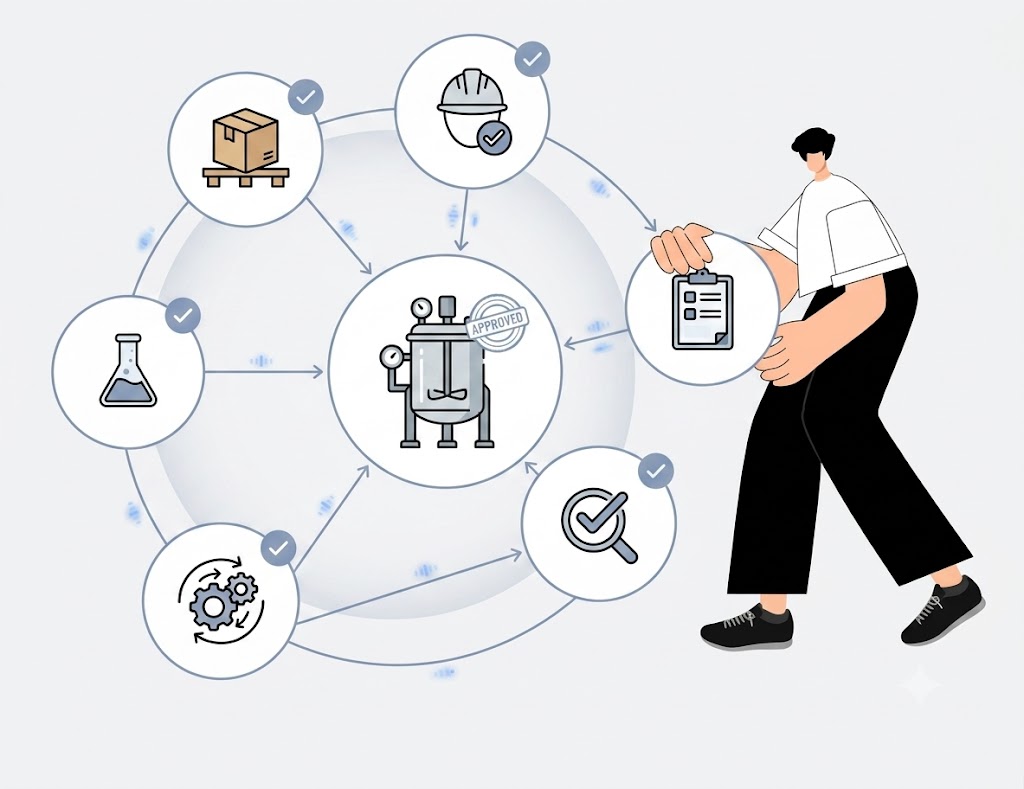
Electronic Batch Manufacturing Records (eBMR)
Replace paper batch cards and Excel sheets with guided, time-stamped digital workflows. Operators execute each step in sequence directly on shop-floor industrial tablets.
Every addition, temperature reading, and stirring duration is logged in real time with operator authentication. Review-by-exception allows plant heads to release batches in minutes rather than days.
Batch Execution & Operator Guidance
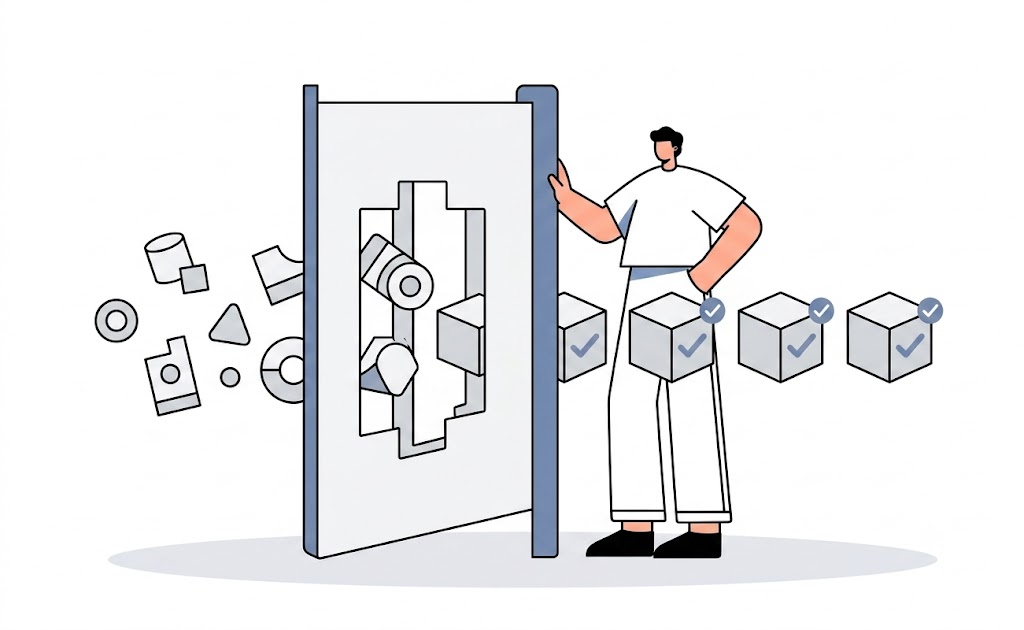
Provide operators with clear, unambiguous instructions at the point of work. Configurable workflows adapt to complex multi-step exothermic reactions, polymer blends, and crystallization processes.
Enforce sequential execution gates: vessel jackets must reach required temperature thresholds before charging hazardous catalysts or initiating exothermic feeds.
Bi-Directional Batch Traceability & Genealogy
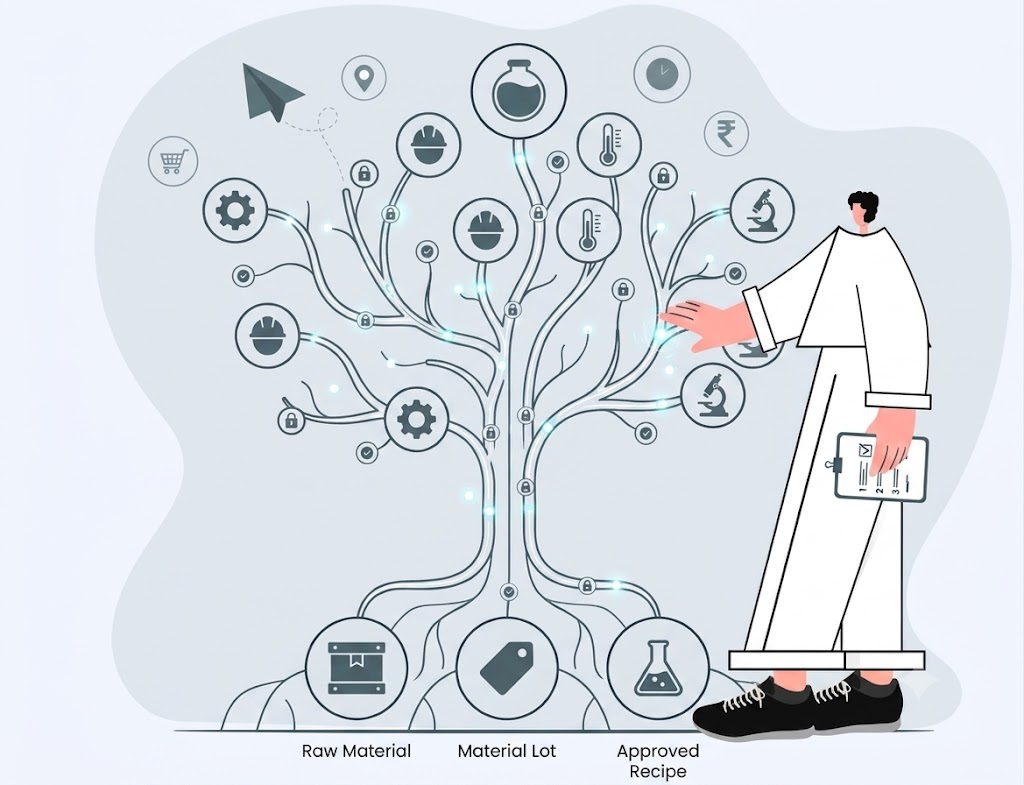
Trace in both directions: from a finished chemical batch back to the exact supplier lots, intermediate blends, and reactor vessels used — and forward from any raw lot to every batch it touched.
Purpose-built for process plants that handle complex blending, solvent recovery, heel utilization, and rework streams that break conventional ERP lot tracking.
SCADA, PLC & Reactor Telemetry Integration
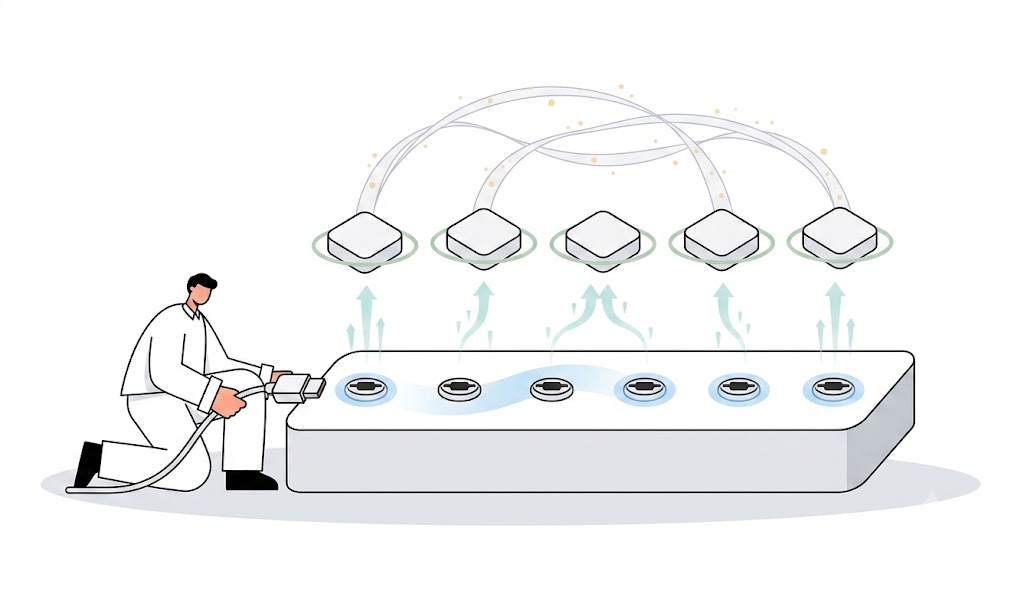
Capture process data directly from equipment instead of copying it by hand from local gauges. Beam MES connects via industrial OPC UA, SCADA, and PLC gateways.
Automatically record temperature ramps, reactor pressure curves, agitation speeds, and pH levels straight into the electronic batch record without operator intervention.

Integrated QC Workflows & Release Gates
Connect laboratory testing directly to batch progression. In-process titration samples, viscosity checks, and GC/HPLC purity results attach directly to the digital batch record.
Enforce automated quality holds: production cannot proceed to downstream crystallization or drum filling until the quality team submits approved lab results.
Built for Plants Like Yours
Purpose-engineered for batch chemical operations where manual data entry, paper records, and recipe scaling have become hard to manage.
Industry & Reactor Fit
Batch Process ManufacturingSpecialty & Fine Chemical Manufacturing
Multi-stage reaction control, temperature envelopes, catalyst additions, and formulation blending.
Pharma, Formulations, Coatings & Resins
Resins, adhesives, coatings, polymers, specialty solvents, and adjacent batch processing sectors.
Plants running batch reactors and mixing vessels where paper batch sheets and spreadsheets create administrative drag, compliance bottlenecks, and batch variation risks.
Start Small, Scale Confidently
No All-or-Nothing Cutover RequiredYou don't need to digitise the whole plant at once. Many chemical manufacturers begin with a single high-value reactor unit or pilot product line to validate electronic batch records and operator adoption before expanding facility-wide.
Single Unit Pilot
Prove electronic execution on 1–2 reactors without interrupting existing plant throughput.
Operator Adoption
Validate that shop floor staff can easily follow digital prompts and lot verifications.
Seamless Expansion
Roll out to additional units, solvent recovery tanks, and packing lines at your own pace.
Records You Can Rely On
Beam MES gives you controlled digital records to support your internal quality management system, ISO standards, and strict customer audits.
Time-Stamped Batch Records
Every parameter check, material addition, and reactor setpoint is logged with verified user ID, date, and exact timestamp.
Role-Based Access Control
Strict permissions ensure each operator, chemist, and supervisor sees and executes only what their qualified role authorizes.
Controlled Approval Workflows
Digital sign-offs and supervisor authorizations for recipe phase progression, deviation handling, and QA hold clearances.
Complete Audit Trail History
Comprehensive log of all user activities, data modifications, and recipe edits for total accountability during compliance audits.
Controlled Master Data
Centralized formulation governance ensures only approved recipe versions, BOM ratios, and tolerance limits are executed on the shop floor.
Audit & Customer Defense
Export complete, structured electronic batch records (eBMR) instantly when customers or auditors request lot proof.
Important Notice on Compliance: Beam MES supports your quality and compliance processes — it does not replace them. Your own plant standard operating procedures (SOPs), system validation, and internal quality system determine regulatory and quality compliance.
Measurable Operational Impact
Targeted efficiency and accuracy gains when chemical batch plants transition from paper batch cards to Beam MES.
Reduction in Manual Data Entry
Automated reactor telemetry, scale readouts, and digital operator prompts eliminate redundant logging across paper and spreadsheets.
Faster Traceability Response
Instant bi-directional genealogy from finished drum back to supplier raw material lots, replacing days of manual batch search.
Less Time on Batch Record Review
Review-by-exception automatically flags out-of-spec temperatures and missing sign-offs, accelerating batch release cycles.
How a Chemical MES Project Works
A structured, low-risk implementation methodology that prevents disruption to active plant output.
Plant Assessment
Map reactors, materials, recipes, and existing automation sources.
Scope & Design
Agree on pilot reactors, integration points, and eBMR digital templates.
Configuration
Setup master recipes, dynamic scaling tolerances, and OPC UA machine tags.
Train & Go-Live
Train operators and shift supervisors on live production batches.
Scale Across Lines
Expand to additional units, solvent recovery, and tank farms over time.
Frequently Asked Questions
Clear answers to common questions about deploying MES in chemical processing environments.
What is MES software in chemical manufacturing?
A Manufacturing Execution System (MES) for chemical manufacturing manages and records shop-floor batch operations in real time. It guides operators through recipe steps, verifies material additions, captures reactor telemetry, and maintains a complete, auditable electronic batch record.
What is the difference between MES and ERP in a chemical plant?
ERP handles business planning, financial accounting, purchase orders, and macro warehouse inventory. MES manages the physical execution on the shop floor: reactor sequencing, dynamic batch scaling, machine telemetry, QC hold points, and detailed operator sign-offs. ERP tells the plant what to make; MES records and controls how it is made.
Can Beam MES connect to our existing SCADA, DCS, or PLCs?
Yes. Beam MES connects to plant automation layers through standard industrial protocols like OPC UA, Modbus, and direct PLC/SCADA gateways. It reads process parameters (temperatures, pressures, feed rates) directly into the electronic batch record without replacing your existing control hardware.
How does batch genealogy work for specialty and fine chemicals?
Beam MES maps bi-directional genealogy. You can trace backward from a finished drum to find raw ingredient lot numbers, reactor vessels, and operators. You can also trace forward from a compromised supplier lot to immediately identify all downstream intermediates, blends, and customer shipments.
Can we start with one reactor or a single pilot unit?
Yes. Beam MES is modular and cloud-native. Plants frequently start with a single production unit or high-value chemical line to validate electronic batch records and operator adoption before scaling across the entire facility.
Explore Related Solutions
Connect chemical execution with other core modules in our manufacturing ecosystem.
Ready to Digitise Your Chemical Batch Operations?
Eliminate paper batch cards, safeguard proprietary formulations, and unlock complete bi-directional traceability with Beam MES.