
MES with SCADA, PLC & OPC UA Integration
Capture critical process parameters straight from your equipment into the electronic batch record — eliminating manual clipboard logging, transcription errors, and disconnected machine data silos.
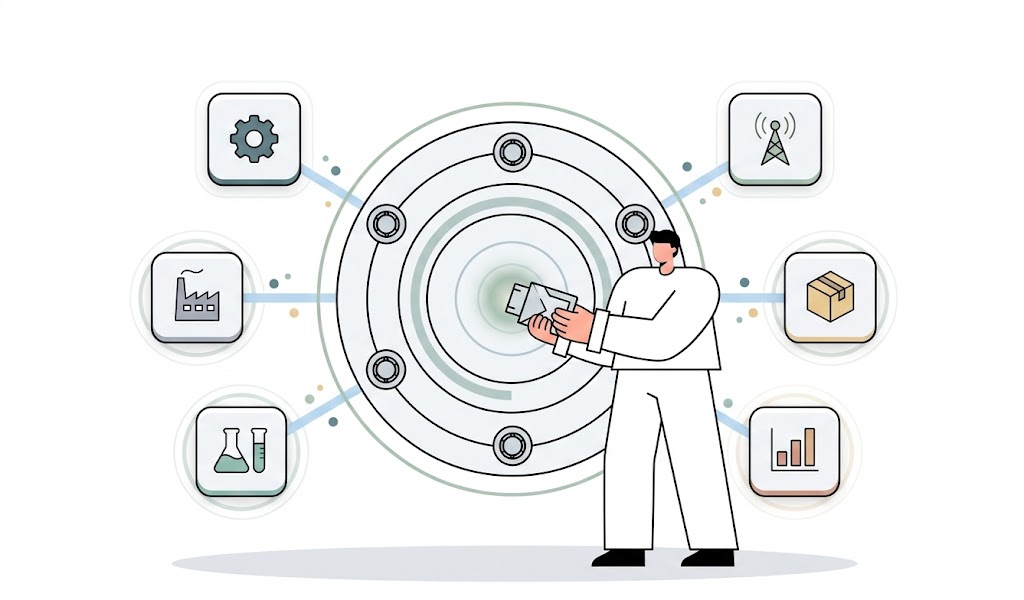
OPC UA & Multi-PLC Machine Telemetry Mesh
SCADA vs MES: How They Fit Together
They are not competitors. SCADA and PLCs run the equipment; Beam MES orchestrates and records the batch manufacturing order.
| Capability Layer | SCADA / PLC / DCS | Beam MES Platform |
|---|---|---|
| Primary Objective | Monitor and control physical equipment loops | Manage, orchestrate, and record the batch order |
| Time Resolution | Real-time, millisecond-by-millisecond signals | Batch, phase, shift, and work order lifecycle |
| Data Managed | Raw signals, 4-20mA telemetry, alarms, PID loops | Materials, lot genealogy, recipes, operator e-signatures |
| Primary Users | Automation, instrumentation, and control engineers | Operators, shift supervisors, QA persons, plant heads |
| Context Scope | Machine-centric (does not know customer or order) | Order-centric (links machine curves to customer lots) |
How Beam MES Connects to Your Machines
Explore how open protocols, tag mapping, and automated logging bind plant machinery to compliance records.
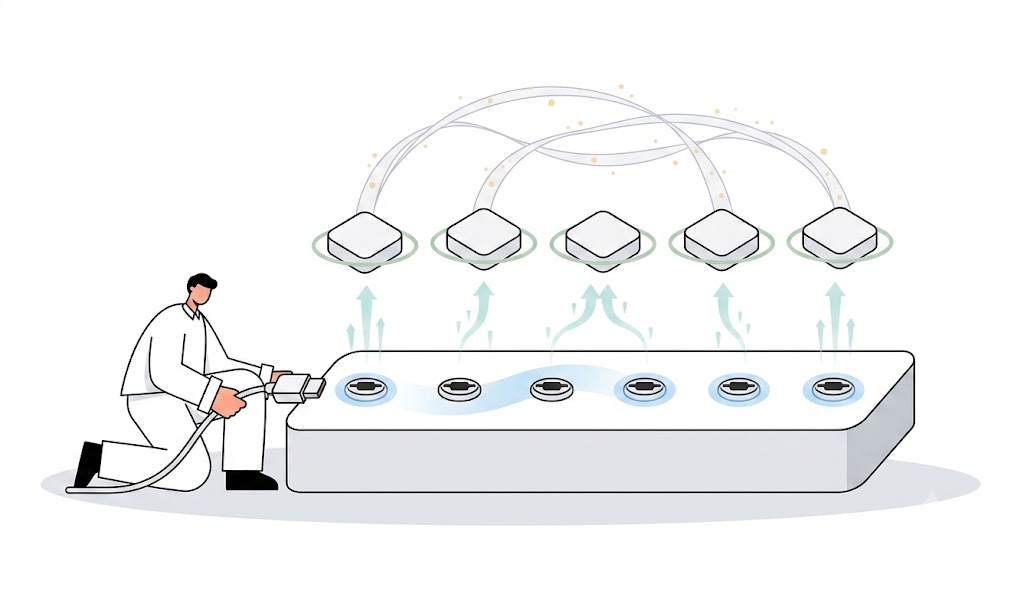
OPC UA & Open Industrial Connectivity
OPC Unified Architecture (OPC UA) is the vendor-neutral global standard for secure industrial data exchange. Beam MES acts as a high-performance OPC UA client connecting to your servers, PLCs, and SCADA systems.
Eliminate custom brittle point-to-point drivers. Standardized connectivity ensures easy onboarding whether connecting to Siemens, Rockwell Allen-Bradley, Schneider, Yokogawa, or Mitsubishi control platforms.
Complete Industrial Integration Architecture
From physical machine sensors to executive ERP reporting, see how data flows seamlessly.
OPC UA & Open Industrial Connectivity
OPC Unified Architecture (OPC UA) is the vendor-neutral global standard for secure industrial data exchange. Beam MES acts as a high-performance OPC UA client connecting to your servers, PLCs, and SCADA systems.
Eliminate custom brittle point-to-point drivers. Standardized connectivity ensures easy onboarding whether connecting to Siemens, Rockwell Allen-Bradley, Schneider, Yokogawa, or Mitsubishi control platforms.
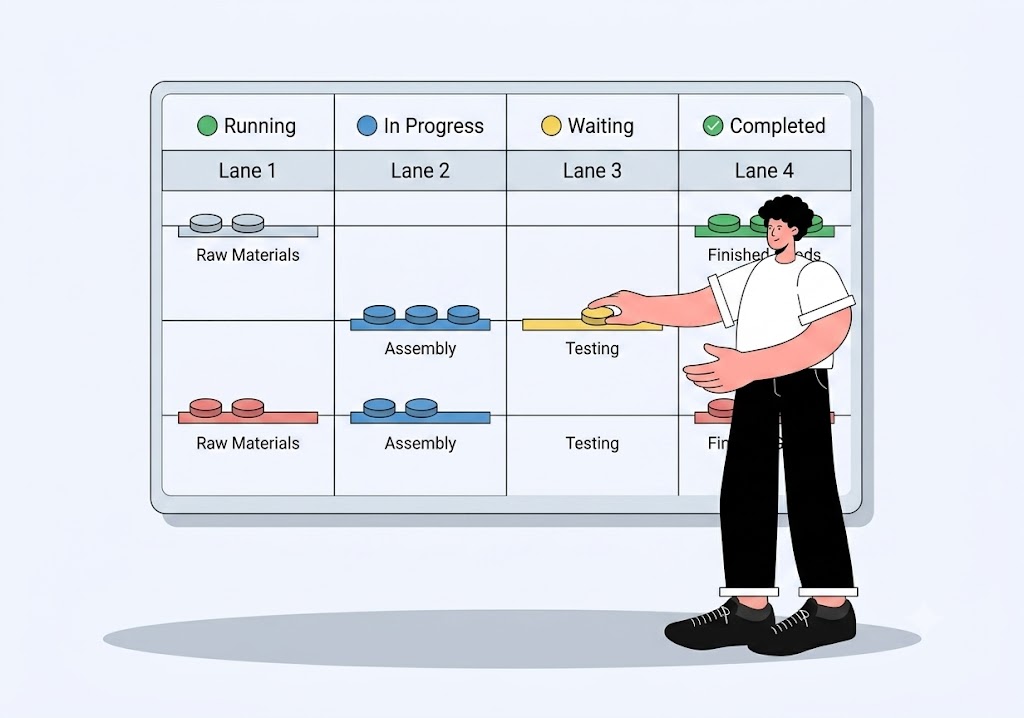
SCADA vs MES: Two Systems Working Together
SCADA and PLCs run and safeguard the equipment in real time (seconds and milliseconds), while Beam MES manages and records the broader batch manufacturing order (batches, materials, operators, and sign-offs).
Beam MES does not compete with or replace your control layer. It complements your automation by contextualizing machine telemetry with recipe requirements, lot numbers, and quality release standards.

Intelligent Parameter Mapping to Batch Steps
Industrial sensors produce continuous streams of raw numbers. Beam MES maps specific tags directly to recipe phases so values belong to the right batch at the exact right moment.
When an operator initiates 'Reaction Phase 2', the MES automatically records the reactor jacket temperature, internal thermocouple reading, and agitator RPM every 30 seconds until the step concludes.
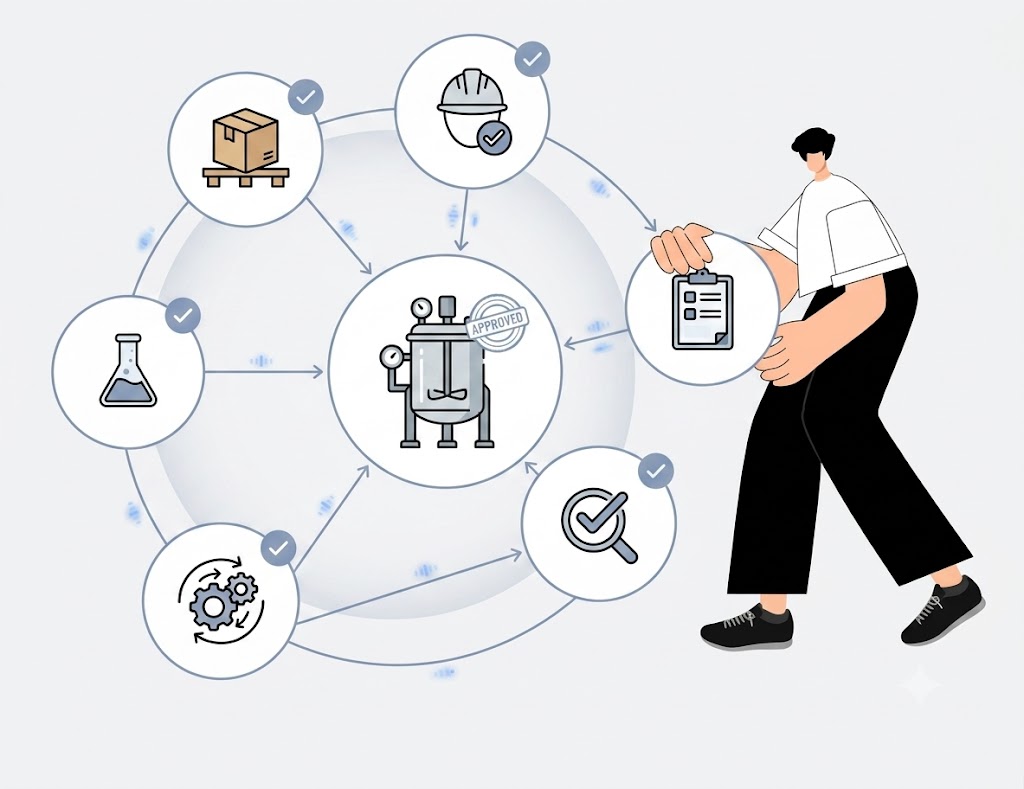
Direct Machine Data Landed in the eBMR
Eliminate clipboard logs and manual gauge transcriptions. Real process values flow straight into the electronic batch record without human copying.
Prevent transcription discrepancies: audit trails prove that recorded batch temperatures match what the physical machine sensor actually logged, ensuring unimpeachable data integrity.

Real-Time Equipment Telemetry & Line Status
Monitor vessel and machine states across the entire plant floor. Supervisors see which reactors are actively running, idle, in CIP cleaning, or awaiting maintenance.
Live telemetry feeds alert engineers immediately if equipment conditions deviate, preventing off-spec batches before critical reaction kinetics run out of control.
What We Need From Your Plant Assessment
Connecting your plant floor is straightforward. Here are the items we review during the initial technical assessment.
Equipment Roster
List of reactors, blenders, presses, scales, and packaging lines.
Protocol Check
Confirm whether OPC UA is enabled or if PLC/Modbus gateways are needed.
Network Security
Review plant OT/IT network segmentation and firewall gateway rules.
Critical Parameters
Define which specific tags (temperatures, weights, RPMs) map to each step.
Frequently Asked Questions
Common questions answered for automation, plant engineering, and IT teams.
What is OPC UA, and why does it matter for MES integration?
OPC Unified Architecture (OPC UA) is the global standard for industrial communication. It allows software like Beam MES to securely read and write data to diverse PLCs, SCADA systems, and sensors using a single protocol, eliminating the need for expensive custom drivers.
Does Beam MES replace our existing SCADA or PLC system?
No. SCADA, PLCs, and DCS control the physical hardware and run equipment safety logic. Beam MES sits above the control layer: it captures the data from SCADA and associates it with the active recipe, batch order, raw material lots, and operator signatures.
Can Beam MES connect to older machines without OPC UA?
Yes. For legacy equipment that lacks native OPC UA support, we deploy edge industrial IoT gateways that convert Modbus, serial, or digital I/O signals into standard protocols accessible by Beam MES.
Does the MES write commands back to machines or just read data?
In standard deployments, Beam MES acts as a read-mostly system to capture process telemetry and recipe verification safely. For advanced automated lines, Beam MES can download verified setpoints and recipe recipes to PLCs after multi-stage operator sign-offs.
What information is needed from our plant to scope automation integration?
During our initial plant assessment, we review your list of key equipment, PLC models, existing SCADA/DCS software, network segmentation topology, and the specific critical parameters (CPPs) you want recorded in each batch step.
Explore Related Solutions
Connected capabilities engineered for process industries.
Tell Us What Automation You Run
Share your equipment and control setup with our engineering team. We'll show you how easily your machines can stream data into compliant batch records.