
Batch Manufacturing Software for Process Plants
Beam MES digitises batch production from raw material issuance and electronic batch records to guided operator execution, bi-directional genealogy, QC release, and automated machine telemetry.
Enterprise Batch Manufacturing Execution Suite
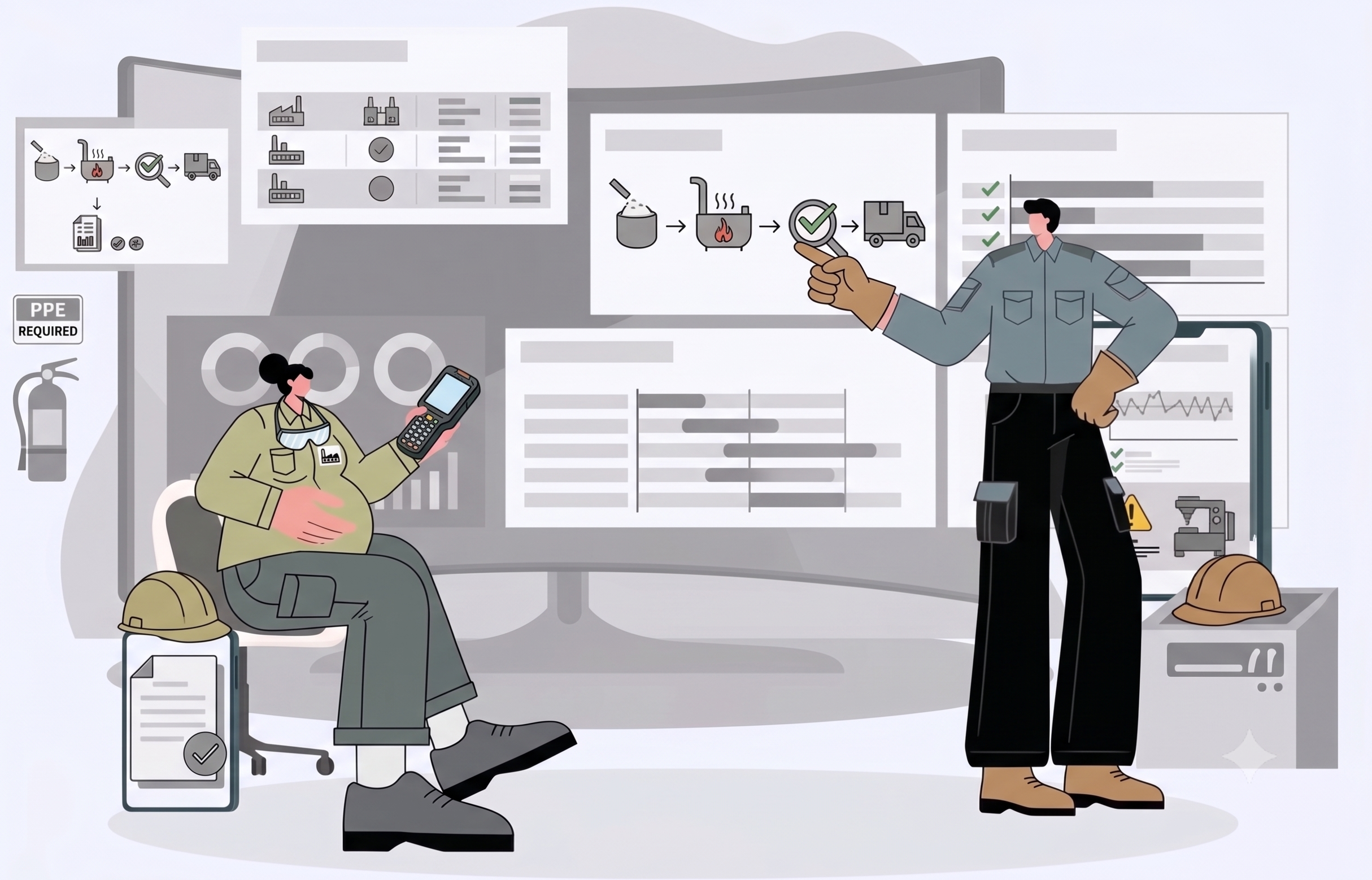
What is Batch Manufacturing Software?
Batch manufacturing software manages production that happens in defined batches: a set quantity of material is processed through a series of steps, in specific equipment, to make a product. It controls what's done, records what happened, and links every batch to its materials, equipment and results.
A manufacturing execution system (MES) is the most complete form of this software. Beam MES is an MES built for batch and process manufacturers.
What a Batch Plant Needs from Software
Compare plant requirements directly with what Beam MES delivers on the shop floor.
| Need | What Beam MES provides |
|---|---|
| Control which materials go into a batch | Material issuance and movement |
| Replace paper batch cards | Electronic batch records. eBMR |
| Guide operators | Step-by-step execution workflows |
| Trace materials and batches | Batch genealogy. Learn more |
| Capture machine data | OPC UA and SCADA/PLC integration. Learn more |
| Link quality checks to batches | QC workflows |
| See and plan production | Planning and monitoring |
| Collect data on the floor | Shop floor data collection |
Batch MES vs ERP vs SCADA: How They Work Together
Beam MES sits between business enterprise resource planning (ERP) and shop-floor automation (SCADA/PLCs) without replacing either.
Enterprise Resource Planning (ERP)
Handles customer sales orders, financial accounting, purchase requisitions, and overall enterprise inventory. It tells the factory what to make and when.
Manufacturing Execution System (MES)
Governs the physical conversion: recipe execution, operator guidance, dynamic vessel scaling, dispensing locks, genealogy, and compliant electronic batch records.
SCADA / PLCs / DCS
Runs the physical machinery in sub-second cycles: maintaining PID temperature loops, valve sequencing, and emergency safety shutdowns.
Batch Process Execution Capabilities
Explore how material control, electronic execution, genealogy, and machine sync combine into one system.
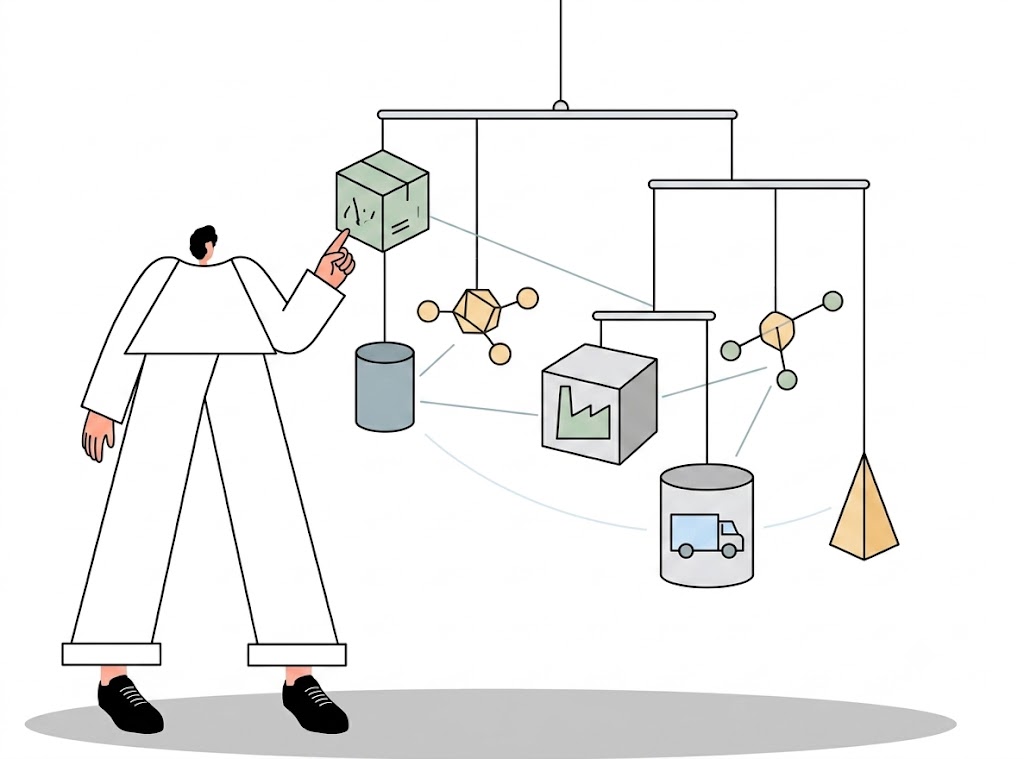
Material Staging & Point-of-Use Verification
Control precisely which raw ingredients, solvents, and catalysts are charged into each batch. Prevent material mix-ups with integrated barcode scanning and digital scale verification.
Automatic dynamic formula scaling: scale batches up or down effortlessly while preserving exact recipe concentration ratios, potency adjustments, and moisture offsets.
Built for Batch and Process Industries
Purpose-built architectures configured around the specific recipe scaling, reaction envelopes, and compliance needs of your sector.
Chemicals
Plants with many batch reactors where paper records, complex catalyst dosing, and manual data entry have become hard to manage.
Pharmaceuticals & Formulations
Digital batch records, electronic signatures (21 CFR Part 11), and end-to-end traceability to support your quality management system.
Paints, Inks & Coatings
Multi-stage pigment dispersion, solvent premixes, tinting quality gates, and automated CIP flush verification.
Food & Beverage Formulations
Allergen matrix cross-contamination lockouts, Brix and moisture scaling, and 60-second farm-to-fork recall trace.
Why Beam MES for Batch Production
Designed from the ground up around continuous and batch process manufacturing workflows.
Built Around the Batch Workflow
Engineered specifically for process manufacturing with dynamic scaling, reaction curves, and multi-vessel routing — not adapted from a generic discrete assembly module.
eBMR Connected to Genealogy
Electronic batch records and lot traceability are unified in a single architecture. The execution record and the genealogy history are one and the same.
Machine Data in the Record
Captures temperatures, pressures, and agitation speeds directly via OPC UA and PLC connections, eliminating manual clipboard copying and transcription drift.
Start with One Unit & Expand
No high-risk, all-or-nothing plant overhaul. Prove value and operator adoption on a single reactor or pilot line, then scale across your facility with zero downtime.
How a Beam MES Project Works
A structured, low-risk phased implementation preventing disruption to active plant manufacturing.
Plant Assessment
Map batch recipes, materials, equipment, and current data sources.
Scope Phase One
Agree on pilot production units, modules, and priority integrations.
Configure & Connect
Configure master recipes, material limits, and machine/OPC UA connections.
Train & Go-Live
Train operators and shift supervisors on live production batches.
Expand Across Plant
Scale smoothly to additional reactors, units, and plant modules over time.
How Pricing is Structured
Pricing depends on your facility scope: the number of production units, active operators, reactors or blending vessels, required modules, machine/ERP integrations, validation requirements, and support level. We scope it accurately following a preliminary plant assessment.
Frequently Asked Questions
Key considerations when modernising batch execution systems in processing plants.
What is the best batch manufacturing software?
The best batch manufacturing software depends on your process, equipment, and records. Look for electronic batch records (eBMR), point-of-use material control, bi-directional genealogy, direct SCADA/PLC machine integration, and a low-risk phased rollout model. A plant assessment will show exactly what architecture fits your facility.
What is MES software in India?
Manufacturing Execution System (MES) software manages and records production on the factory floor in real time. In India, it is adopted by process manufacturers in chemicals, pharmaceuticals, APIs, paints, and formulations to eliminate paper batch cards, improve compliance, and satisfy international customer audits. Beam MES is purpose-built for batch and process plants.
What is the difference between batch MES and ERP?
ERP handles business planning, financial accounting, customer sales orders, purchase requisitions, and macro warehouse inventory. Batch MES manages physical execution on the shop floor: dynamic recipe scaling, equipment parameter recording, barcode staging checks, in-process QC hold gates, and operator sign-offs. ERP tells the plant what to make; MES records and controls how it is made.
Is batch MES software only for large enterprises?
No. Many batch plants start with a single production unit, reactor train, or high-value chemical line to validate electronic batch records and operator adoption before scaling across the entire plant site.
Can Beam MES connect directly to our plant machines and SCADA?
Yes. Beam MES connects to plant automation layers through standard industrial protocols like OPC UA, Modbus, and direct PLC/SCADA gateways. It captures critical process parameters (temperatures, pressures, feed rates, agitation) directly into the electronic batch record without manual clipboard transcription.
How much does batch manufacturing software cost?
Pricing depends on your plant scope: the number of production units, active operators, reactors or machines, modules needed, machine and ERP integrations, data migration, and required support level. We provide a transparent scope and proposal following a preliminary plant assessment.
Explore Related Solutions
Discover connected capabilities engineered to digitise operations.
Ready to Digitise Your Batch Manufacturing?
Eliminate paper batch cards, prevent manual dispensing mistakes, and gain total bi-directional lot traceability with Beam MES.